Dunton Hot Springs Colorado Review: America’s Most Unique Mountain Spa Resort
There is a road in southwestern Colorado that most GPS systems simply give up on. It begins as a numbered highway, narrows to a dirt track, climbs through hairpin switchbacks with no guardrails, and eventually — after you have begun to wonder whether you’ve made a terrible mistake — deposits you at a weathered metal gate and a hand-painted wooden sign. Beyond it, arranged in a loose circle around a working saloon and dance hall, stand thirteen hand-hewn log cabins dating back to the 1880s. A waterfall crashes somewhere behind the treeline. The air at 9,000 feet is cold and clean in a way that feels almost aggressive after hours in a car.
You have arrived at Dunton Hot Springs. And the moment a member of staff appears, takes your bags, parks your car for the duration of your stay, and hands you a cocktail with your name written on a card — you understand that the difficult journey was, entirely, the point.
A Town With a Past
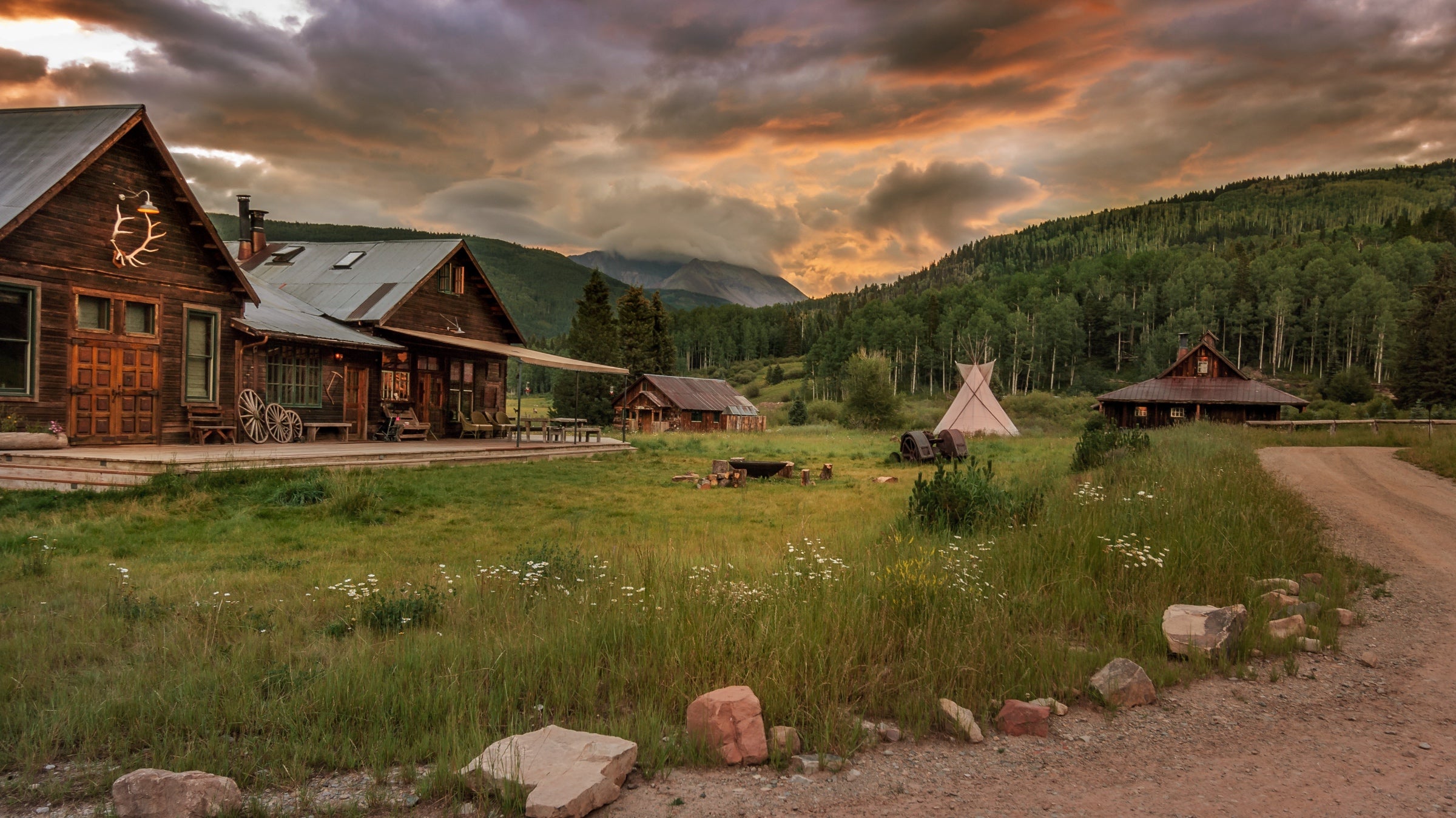 Dunton was founded in 1885 as a silver and gold mining town, deep in the San Juan Mountains of the Colorado Rockies, about 35 miles from Telluride along roads that were rugged even by frontier standards. At its peak, the town housed around 200 people. In 1892, a man named Butch Cassidy — shortly after robbing the bank in Telluride with his partner — is said to have laid low in Dunton’s saloon for two weeks before heading on. When he returned with his girlfriend, he etched “Butch + Kay” into the original bar wood. The inscription is still there. You can drink next to it.
The town was abandoned in the early twentieth century and spent decades as a genuine ghost town — weathered buildings, collapsed roofs, the saloon standing alone in the forest. In the 1990s, it was acquired by a German-American couple, Bernt Kuhlmann and Christoph Henkel, who undertook a meticulous multi-year restoration using original materials and period-appropriate construction techniques. The goal was not to create a themed resort but to genuinely bring the town back — and then furnish it with the kind of quiet luxury that has no need to announce itself.
In 2023, Dunton received LEED Gold certification from the US Green Building Council — an extraordinary achievement for a property of its age and character, reflecting a commitment to minimal environmental impact that runs through every aspect of how the resort operates.
The Cabins
There are thirteen guest cabins at Dunton, each restored from an original 19th-century structure and each named for someone or something from the town’s history. The Major Ross Cabin. The  Bjoerkmans, named for the miner who built it and notable for its view of the waterfall and its understated furnishings — rustic rugs, classic wooden furniture, a wood-burning stove that radiates a particular quality of warmth you don’t get from central heating. The Dolores, with a large deck overlooking the river, chosen by guests who want seclusion above everything else.
All cabins share certain features: hand-hewn log walls, heated slate floors, antique bathtubs, vintage décor sourced from Colorado history, luxury linens, REN bath products, and wood-burning stoves. No televisions. No alarm clocks. Cell service is essentially nonexistent on property, which feels less like a limitation and more like the first gift the resort gives you. Wi-Fi, however, is available for those who genuinely cannot disconnect entirely.
Three cabins deviate from the main inventory in meaningful ways. The Well House is the most sought-after room in the resort: a beautifully renovated cabin with its own private hot spring pool and cold plunge bath, a king-sized bed, wood-burning stove, and full bathroom sleeping two guests. Booking it requires planning months in advance. Christy’s Tent is Dunton’s take on glamping — a 550-square-foot structured canvas tent with a large shower that looks out at the surrounding forest, a wood-burning stove, and a patio for cold-morning coffee. For those who want the experience without quite committing to a log cabin, it is an alternative that surprises almost everyone who chooses it.
The Hot Springs
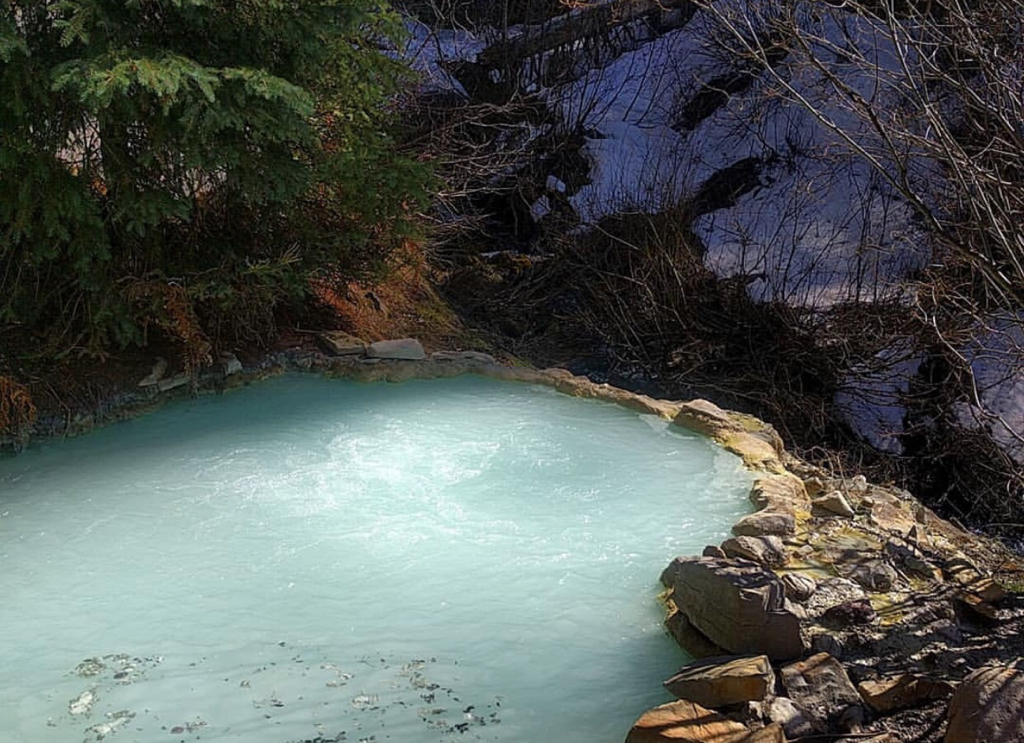 Before the miners arrived, the Ute people — who used the San Juans as summer hunting grounds for centuries — are believed to have known and used these springs. The geological explanation is precise: the springs are controlled by tectonic forces associated with the Triassic Dolores Formation, located on the trace of a north-trending fault. There are many other seeps and springs in the area, and Colorado’s only geyser — a mildly sulfuric spring that bubbles up approximately every 45 minutes — is on the property.
The main bathhouse, fed by the underground mineral springs, holds an indoor pool visible through a floor-to-ceiling window that frames the surrounding mountains in a way that has made this particular view one of the more photographed interiors in Colorado. There is a smaller, hotter outdoor pool set among the trees, best experienced late at night when the sky is clear and the temperature has dropped to something serious. The contrast between near-scalding mineral water and freezing mountain air at this altitude produces a physical sensation that is genuinely difficult to describe and completely unlike anything available at a hotel spa with a hydrotherapy circuit.
The mineral content of Dunton’s springs — rich in silica and trace minerals — leaves skin noticeably different after a single soak. Guests who spend multiple days at the resort report significant improvements in sleep quality, which the altitude and the absence of digital stimulation contributes to in equal measure.
The Spa: A Former Pony Express Building
Dunton’s spa occupies an original building from the Pony Express route — the 19th-century mail delivery system that used horseback riders across the American West. The structure has been 
All spa treatments run for 75 minutes and use products specifically formulated for high-altitude alpine climates — an important detail, since the skin behaves differently at 9,000 feet and products calibrated for sea level often underperform. Signature treatments include the Mountain Glow Scrub — a full-body exfoliation using rose-infused alpine ingredients that leaves skin luminous — and the Dunton Deep Tissue Massage, designed for guests who have spent the day hiking or horseback riding and need genuine therapeutic work rather than relaxation-oriented pressure. The spa’s facial menu draws on Eminence Organic Skin Care, a brand built around farm-fresh ingredients that pairs well with the resort’s own agricultural ethos.
The yoga studio, also housed in a restored historic building, offers morning and evening sessions. The “Wellness in the San Juans” programme — a two-hour guided outdoor mindfulness class combining meditation, yoga, and breathwork against the backdrop of the mountains — is consistently cited by returning guests as among the most memorable single experiences the resort provides.
Dining in the Saloon
Meals at Dunton are communal, served in the original saloon and dance hall. This is not incidental — it is a deliberate philosophy. The resort operates on the premise that the shared table is the oldest form of community, and that strangers who eat together across three courses become something other than strangers by the time dessert arrives. The chef prepares farm-to-table menus that change daily based on what is available from local farms and the resort’s own cultivated herbs. Dinner might be pepper-crusted tuna with tomato chutney, rack of Colorado lamb, or a sophisticated vegetarian tasting menu that surprises guests who expected ranch food. Breakfasts are exceptional: special granolas, baked goods made fresh each morning — the banana muffins and cranberry scones are frequently mentioned by guests — plus eggs and locally sourced dairy.
All meals, beverages, and most alcohol are included in the rate, with the exception of a curated Reserve wine and spirits list. Kyle, the bar manager, makes cocktails that have been described by multiple guests as among the best they’ve had anywhere — not just in mountain resorts, but anywhere.
Activities and the Wider Landscape
:max_bytes(150000):strip_icc()/TAL-dunton-hot-springs-ice-climbing-colorado-DUNTONCO0123-72e207d39ee842e9ba5aa1b9ede86f0b.jpg) The San Juan Mountains surrounding Dunton are among the most dramatic in North America. The resort sits at the edge of the Weminuche Wilderness — the largest wilderness area in Colorado, with peaks exceeding 14,000 feet and trail systems that range from gentle meadow walks to multi-day backcountry routes. Guided horseback rides at sunset, when the San Juan peaks are washed in gold, are the single activity most requested by returning guests. Fly-fishing in the Dolores River, which runs along the edge of the property, is available for all skill levels with guides who have worked these waters for decades.
The San Juan Mountains surrounding Dunton are among the most dramatic in North America. The resort sits at the edge of the Weminuche Wilderness — the largest wilderness area in Colorado, with peaks exceeding 14,000 feet and trail systems that range from gentle meadow walks to multi-day backcountry routes. Guided horseback rides at sunset, when the San Juan peaks are washed in gold, are the single activity most requested by returning guests. Fly-fishing in the Dolores River, which runs along the edge of the property, is available for all skill levels with guides who have worked these waters for decades.
In winter: cross-country skiing directly from the resort, snowshoeing with a naturalist guide, dog sledding through the alpine forest (seven miles through fresh snow, pulled by a team of working sled dogs — a genuinely bucket-list experience), and heli-skiing at altitudes between 10,000 and 14,000 feet. In summer: mountain biking, 4WD touring to high passes, ice climbing at elevation, and rafting on nearby rivers.
Prices and Practical Details
Rates at Dunton Hot Springs start from approximately $1,200 per night, all-inclusive: lodging, all meals and most beverages, use of the hot springs, yoga studio, and all standard activities. The Well House cabin with its private hot spring commands a significant premium. The entire resort can be booked exclusively for weddings, corporate retreats, and private events.
The nearest airports are Telluride Regional Airport (TEX) — about one hour by mountain road — and Durango-La Plata County Airport (DRO), approximately two hours away. The resort operates a shuttle from Cortez for guests who prefer not to drive the final mountain road themselves. Cell service is unavailable on the property, so download everything you’ll need offline before you leave the valley.
Best for: Couples seeking complete disconnection; history enthusiasts; outdoor adventurers who want luxury at basecamp; anyone who has read about the American West and wants to sleep in it.
Address: Dunton, Dolores County, Colorado (near West Fork Road No. 38